
Book Appointment Now

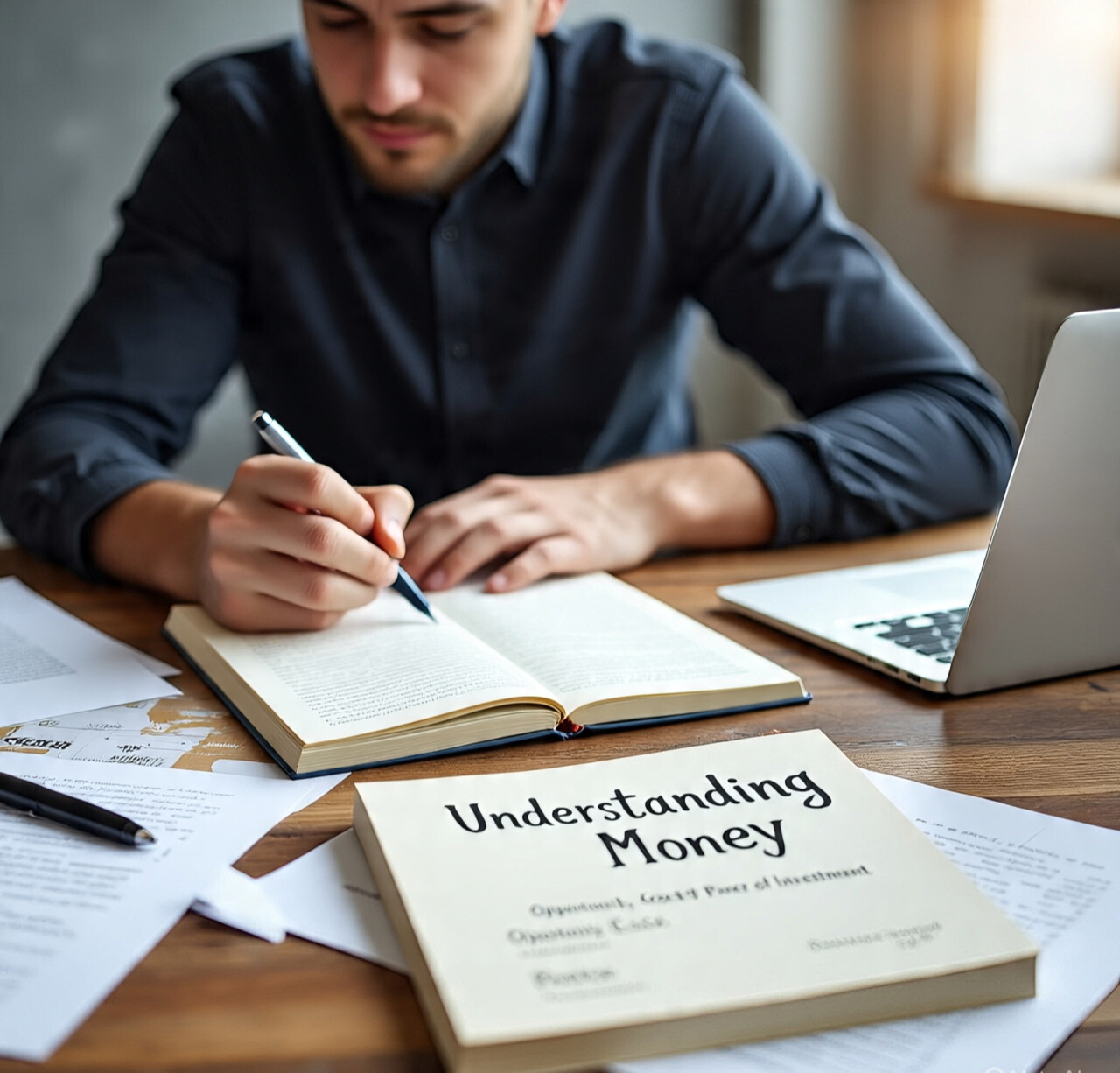
Understanding Money Cost, Opportunity Cost, and the Power of Investment
In Nigeria, every Naira counts. We navigate a dynamic economic landscape where careful financial decisions are not just advisable, but essential for survival and growth. From the daily “danfo” fare to the ambitious goal of owning a home, our lives are a continuous series of choices about how we spend, save, and invest our hard-earned money.
When we consider a purchase or an investment, our immediate focus naturally gravitates towards the money cost—the explicit amount we have to pay. But what if I told you that focusing solely on the price tag gives you only half the picture? The real power in financial decision-making comes from understanding a second, more powerful, yet invisible, concept: opportunity cost.
This article will demystify these two fundamental concepts, illustrate their relevance with practical Nigerian examples, and, most importantly, show you how embracing them can transform your financial journey from reactive spending to proactive wealth-building through strategic investment.
 Money Cost: The Price You See
Let’s start with the familiar. Money cost (also known as explicit cost or accounting cost) is the direct, out-of-pocket monetary expense incurred when you acquire a good, service, or asset. It’s the number of Naira that leaves your wallet or bank account, and it’s the cost that’s easy to see and track.
Your daily or monthly expenses are all examples of money costs. These can be broken down into different categories:
- Fixed Costs: These are expenses that remain constant over a period. Examples include your monthly rent (₦500,000 annually), a car loan repayment, or a child’s school fees (e.g., ₦150,000 per term).
- Variable Costs: These expenses fluctuate based on consumption. Your monthly electricity bill (estimated, of course!), fuel for your generator (e.g., ₦10,000 weekly), or the groceries you buy each week are perfect examples.
- Discretionary Costs: These are non-essential expenses that you can choose to cut back on. Think about the ₦2,000 you spend on a plate of Jollof rice and chicken at a local buka or the ₦10,000 you spend on a night out with friends.
Effectively managing your money costs is the first, most crucial step towards financial control. This isn’t about deprivation; it’s about being intentional. It involves creating a detailed budget to plan how you will spend and save, using an app or notebook for expense tracking to monitor every Naira, and actively seeking value by looking for fair prices and discounts. By mastering your money costs, you lay the foundation for financial stability. But as we’ll see, stability is just the starting point; growth requires a deeper level of thinking.
 Opportunity Cost: The Price You Don’t See
This is where things get interesting. Opportunity cost is the value of the next best alternative that you forgo when making a choice. It’s the benefit you forgo by choosing one option over another. Unlike money cost, opportunity cost is not recorded in your financial statements, but its impact on your long-term wealth can be far more significant.
Every decision you make involves a trade-off. Since our resources (money, time, and energy) are limited, choosing one path means implicitly rejecting others. Let’s illustrate with some common Nigerian scenarios to truly bring this concept to life.
Example 1: The New Smartphone vs. Investment
Imagine you’ve saved ₦300,000. You’ve been eyeing the latest smartphone, which costs exactly ₦300,000. The money cost of the phone is clear: ₦300,000.
Your choice to buy the phone means you get to enjoy its features, the powerful camera, and the convenience it brings. You’re trading your cash for this immediate gratification.
But what is the alternative? What is the opportunity cost? Let’s say the next best alternative for that ₦300,000 was to invest it in a well-managed mutual fund. With a conservative average return of 15% per annum, after one year, your ₦300,000 could have grown to ₦345,000. After five years, thanks to the magic of compounding, it could be worth over ₦600,000. The opportunity cost of buying that phone is the potential ₦345,000 (or over ₦600,000 after five years) you could have had. You traded potential financial growth for a shiny gadget that will likely be outdated in a few years.
Example 2: Owning a Car vs. Using Public Transport/Ride-Hailing
This is a decision many Nigerians face, especially with fluctuating fuel prices.
The money costs of owning a car are numerous: an initial purchase price (e.g., ₦3,000,000 for a fairly used car), plus ongoing expenses like fuel (₦50,000/month), routine maintenance (₦15,000/month), insurance (₦70,000/year), and unexpected repairs.
The alternative is to rely on public transport and ride-hailing services. Let’s say your average monthly transport cost is ₦40,000. The opportunity cost of owning the car is the difference in expenses. If owning a car costs you an average of ₦80,000 per month (after factoring in all costs, including depreciation), you’re forgoing a saving of ₦40,000 each month. Investing this monthly saving at a 10% annual return could accumulate over ₦3.1 million in just five years. The opportunity cost is not just the lost investment growth, but also the time spent in traffic and managing car-related issues.
Example 3: The Cost of Inaction
Perhaps the most insidious opportunity cost is the one associated with inaction. This is the cost you incur by doing nothing. When you decide to “wait until you have more money” or “figure things out later” before starting to save or invest, you are incurring a significant opportunity cost.
The alternative is to start saving or investing even a small amount today. The opportunity cost is the potential wealth you could have built over time. In Nigeria, where inflation can rapidly erode the purchasing power of money, simply holding cash in your bank account has a high opportunity cost. You’re losing money in real terms every day. The opportunity cost of delaying your financial journey is the future wealth and security that could have been yours.
 Thoughts on Investment: Turning Opportunity Costs into Future Gains
Understanding both money cost and opportunity cost is transformative because it forces you to think beyond the immediate transaction. It encourages a more holistic view of your financial decisions. Instead of just asking “Can I afford this?”, you start asking “What am I giving up by making this choice?”. This is the mindset shift that empowers you to invest.
Investing is simply the act of putting your money to work for you. It’s the strategic choice to accept a short-term opportunity cost (giving up today’s spending) for the potential of a much greater long-term return. It’s the next best alternative that turns the concept of opportunity cost on its head, using it as a catalyst for growth.
Here are a few thoughts on how to approach investment in Nigeria:
- Start Early, Start Small: The power of compounding means that time is your greatest ally. Even a small amount invested consistently over a long period can grow into a substantial sum. Don’t wait until you have a large lump sum. Start with what you can afford, whether it’s ₦5,000 or ₦10,000 a month.
- Educate Yourself: Before you put your money anywhere, understand what you’re investing in. Continuously learn about different investment vehicles available in Nigeria. Some popular options include:
- Treasury Bills (T-Bills) and FGN Bonds: These are debt instruments issued by the government and are generally considered low-risk. They are a good starting point for conservative investors.
- Mutual Funds: These allow you to pool your money with other investors, which is then managed by a professional fund manager. This provides diversification and access to a broad range of assets without needing a large capital.
- Real Estate: This can be a powerful wealth-building tool, whether through direct ownership or a Real Estate Investment Trust (REIT).
- Stocks: Buying stocks means owning a piece of a company. While potentially offering high returns, it also comes with higher risk. It’s crucial to understand the market and the companies you’re investing in.
- Diversify Your Portfolio: Don’t put all your eggs in one basket. Spreading your investments across different asset classes (e.g., a mix of bonds, mutual funds, and stocks) can help mitigate risk.
- Align with Your Goals and Risk Tolerance: Are you saving for a child’s education in 10 years, or a down payment on a house in three? Your investment strategy should align with your specific financial goals and your personal comfort level with risk.
Ultimately, your money has a job to do. Keeping it idle is an opportunity cost in itself. By consciously and strategically investing, you transform that missed opportunity into a future gain, building a more secure and prosperous future for yourself and your family.
Conclusion
In the journey towards financial freedom, understanding both money cost and opportunity cost is paramount. The money cost is what you pay, but the opportunity cost is what you sacrifice. By consciously considering both, you move from reactive spending to proactive financial planning. You empower yourself to make smarter, more strategic decisions that align with your deepest aspirations.
The next time you’re about to make a purchase, whether it’s a new gadget or an expensive meal, take a moment to look beyond the price tag. See the full financial picture—both the money cost and the opportunity cost. It’s in that moment of reflection that true financial wisdom takes root, setting you on a path to building lasting wealth.
Start today by seeing every Naira not just for what it can buy, but for what it could become.



This is a very robust, simple ans all encompassing financial literary artice for any one who desires to master Money and make it work. Well articulated. Appreciate the efforts sir
Thank you for your response