
Book Appointment Now

Why Today’s Innovators Are Rarely Christians — How We Can Rediscover Our Creative Mandate.
Recently, I conducted a simple search. I wanted to know: “How many of today’s leading innovators openly profess Christianity?” I expected to find at least a reasonable number, maybe not the majority, but surely enough to form a visible presence.
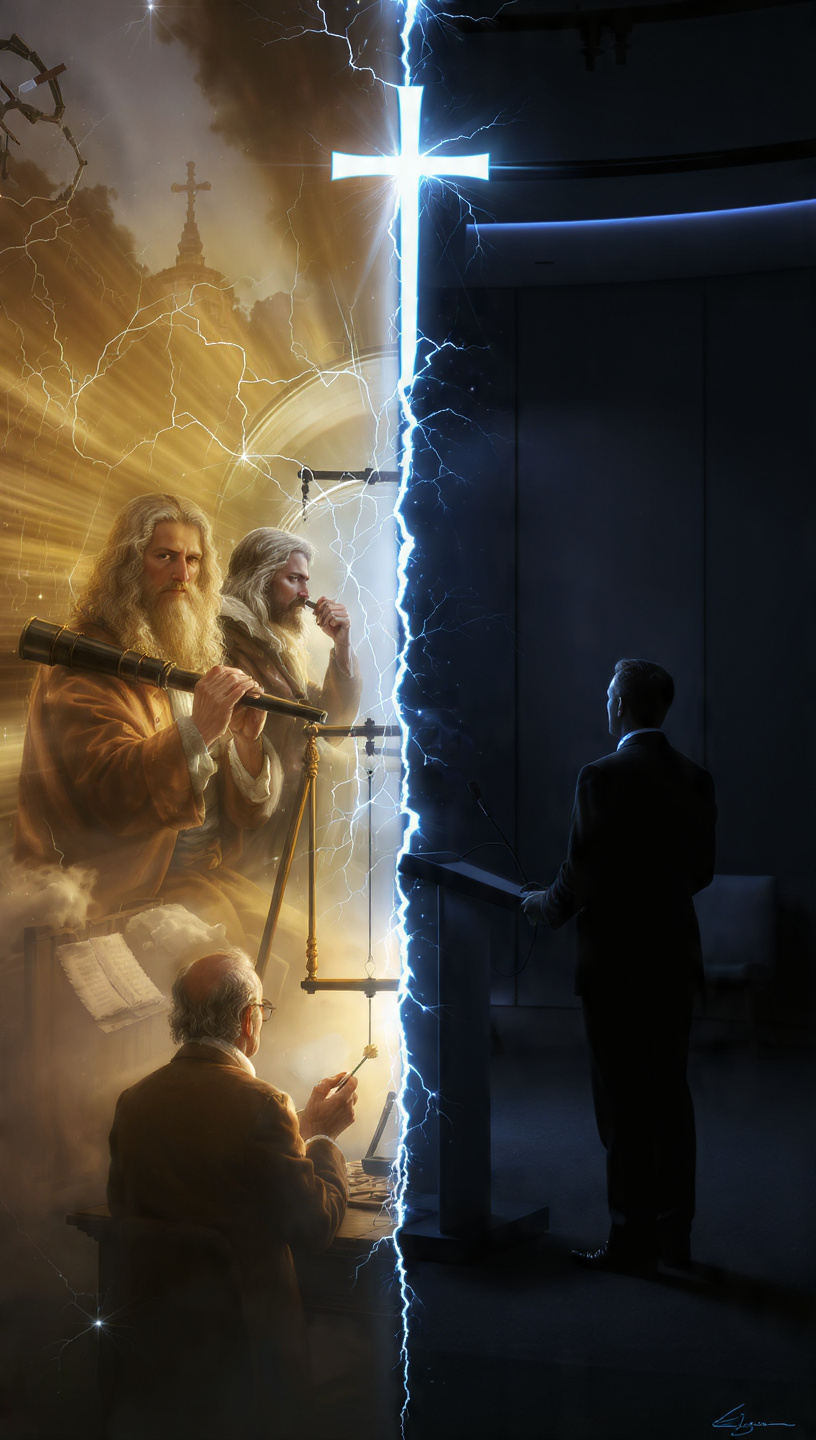
As a former student of Chemistry and Physics, what I found shocked me. There were barely any. While names like Newton, Pascal, Faraday, Bach, and Nightingale once dominated the world of innovation and openly professed Christ, today’s landscape looks very different.
Among the top inventors, founders, tech leaders, and global problem-solvers, only a tiny handful publicly identify as Christian. Many are silent. Most are absent. This discovery pushed me into a deeper question: What happened to Christian creativity? How did the faith that once shaped science, art, medicine, architecture, and technology lose its influence in innovation? And most importantly, how do we trace our way back?
My journey led me to five major insights and a roadmap for restoration.
-
We Lost the Theology of Dominion
The early Christian innovators believed their work was part of God’s mandate:
“Be fruitful, multiply, fill the earth, and subdue it.” To them, science was worship, and discovery was obedience. Newton once said he was “thinking God’s thoughts after Him.” Faraday saw every experiment as “reading the book of nature written by God.” Their creativity flowed from a sense of divine responsibility. But in many modern Christian circles, the worldview has shifted from dominion to survival:
- “God will take care of everything.”
- “This world is not my home.”
- “We are just passing through.”
When a faith becomes escape-minded, believers stop building.
-
Faith and Thinking Were Separated
Historically, Christianity gave the world:
- Universities
- Scientific method
- Classical arts
- Hospitals
- Architecture
- Modern charity systems
Believers were trained to think deeply, reason logically, and study creation to understand the Creator. But at some point, thinking began to be seen as “less spiritual.” Curiosity became “dangerous.” Questions became “rebellious.”
A faith that discourages thinking cannot produce innovators.
-
Over-Spiritualization Replaced Responsibility.
In many Christian spaces today, the default answer to challenges is purely spiritual:
- Pray.
- Sow Seeds
- Wait.
- Believe.
- Let God handle it.
- Fast.
This is beautiful and necessary but incomplete.
God gives ideas, but we must build them. God opens doors, but we must walk through them.
God inspires creativity, but we must put in the hours of research, training, skill, and iteration.
Newton prayed, but he also studied mathematics relentlessly.
Carver listened to God, but he conducted thousands of plant experiments.
Bach worshipped, but he trained with military precision.
Prayer is not a substitute for thinking. Faith is not a replacement for responsibility.
-
Excellence Slipped Away
The Christian innovators of old were masters of their craft. They believed excellence reflected God’s nature.
Today, many believers settle for:
- Wishful thinking
- Minimal effort
- Shortcuts
- Untested concepts
- Quick results
But innovation demands:
- Discipline
- Rigor
- Patience
- Precision
- Years of consistency
Excellence is not pride. It is stewardship.
-
Creativity Stopped Being Seen as Spiritual
Perhaps the biggest loss is this: We stopped seeing creativity as part of our spiritual DNA.
Early believers thought:
- To create is to reflect the Creator.
- To discover is to worship.
- To solve problems is to glorify God.
Today, many think:
- Science is worldly.
- Creativity is secular.
- Innovation is not a ministry.
And so Christians withdrew from the spaces that shape culture. The world did not push Christianity out of creativity. We stepped back voluntarily.
 The Roadmap For Restoration
Restoration is possible, but it requires intentional rebuilding.
-
Rediscover the Christian Mandate for Creativity
We must teach again that:
- God is the Creator
- We are made in His image
- Creativity is part of our calling
- Innovation is a form of worship
- Solving problems is part of spiritual warfare
When Christians reclaim dominion thinking, creativity flourishes.
-
Bring Faith and Intellect Back Together
A mature church welcomes:
- Questions
- Research
- Exploration
- Critical thinking
- Scientific curiosity
Our faith is not fragile. It can handle an inquiry.
-
Replace Passive Faith with Active Partnership
We need a culture that says, “Pray as it depends on God. Work as it depends on you.”
God does not bypass the mind. He energises it.
-
Restore a Culture of Excellence
We must cultivate believers who aim for mastery:
- World-class scientists
- World-class musicians
- World-class engineers
- World-class entrepreneurs
- World-class thinkers
The world listens to excellence.
-
Build and Celebrate Christian Innovators
We need:
- Mentorship for young creatives
- Innovation hubs in churches
- Scholarships for STEM fields
- Christian think tanks
- Creative incubators
- Platforms that highlight believing inventors
The next generation of Newtons, Faradays, Nightingales, and Carvers may already be sitting in our pews waiting to be ignited.
In Conclusion, I strongly believe “The Creative Flame Is Not Lost. It’s Only Forgotten”. If you share my belief, share this article.